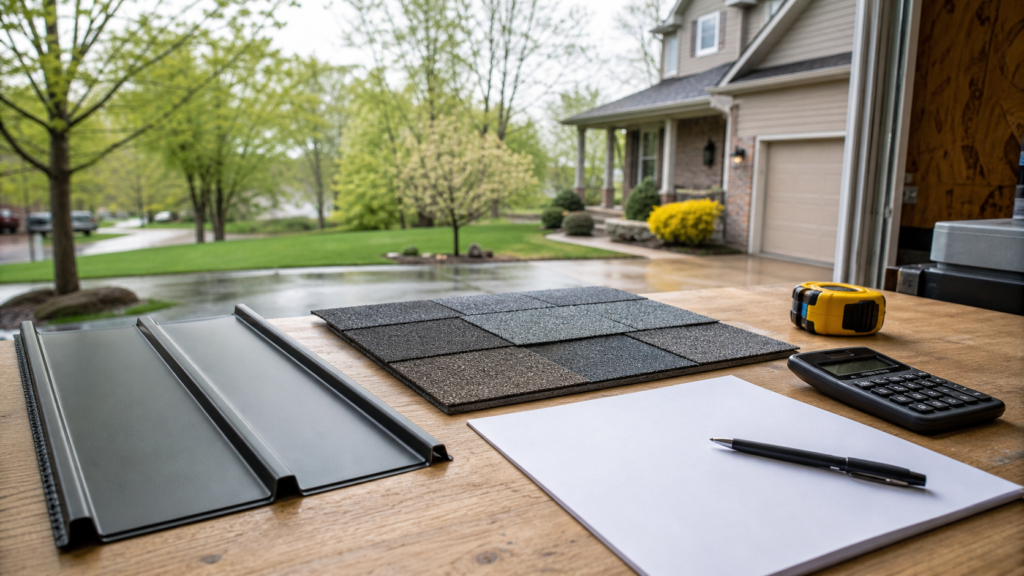
Metal roofing usually costs more upfront than asphalt shingles, and that should be stated plainly. The more useful question is what that higher cost actually represents and how it looks over a longer ownership timeline, not just at the moment of installation. For homeowners who expect to stay in their home for many years, the cost difference between metal and asphalt often looks different after you account for replacement cycles, maintenance demands, and the stress a Michigan climate puts on roofing materials. What follows explains that gap honestly before you get into specific numbers.
The Short Answer — Yes, and Here Is What It Means
What the Upfront Premium Actually Buys
If you are asking are metal roofs expensive, the straightforward answer is yes when you compare them to standard asphalt shingles at the point of installation. Metal is a higher-cost roofing category. The materials are different, the system design is different, and the labor required to install the roof correctly is more exacting.
That does not automatically make metal overpriced. It means the homeowner is paying for a different kind of roof with a different performance profile. The important distinction is that the premium is not just a markup on appearance. In most cases, it reflects longer service life, stronger weather performance, and a system that is built to do more than the baseline shingle option.
Why the Right Question Is Expensive Compared to What, and Over How Long
A homeowner comparing metal to asphalt is not really deciding whether metal is “expensive” in the abstract. The real question is expensive compared to what alternative, and over what ownership horizon.
If the comparison is only today’s installation cost, asphalt usually wins. If the comparison expands to include how often the roof may need to be replaced, what maintenance may be required over time, and how well the system handles a demanding climate, the gap starts to look different. That shift in framing is what this article is designed to explain.
Metal Roofing Cost Compared to Shingles — The Frame That Matters
The Upfront Gap
The most direct answer to the homeowner comparing options is that metal roofing cost compared to shingles is higher at the front end of the project. Asphalt is usually the lower-cost entry point because the material is more common, the system is simpler, and the labor pool is broader.
Metal, especially premium residential systems, enters the conversation at a different level. The homeowner is not buying the same thing in a different finish. They are buying a different roofing system with a different design philosophy and a different expectation for how long it will perform.
How the Replacement Cycle Changes the Math
Where the comparison gets more interesting is not at the first invoice but over the life of the house. Asphalt shingles are often evaluated as a lower upfront purchase, but that lower entry cost exists inside a shorter replacement cycle.
Metal changes the picture because it is typically expected to stay in service much longer, with fewer major replacement decisions along the way.
That is why a simple upfront-cost comparison can be misleading if it is treated as the whole story. A homeowner deciding between the two materials is really making a judgment about present cost versus long-term ownership demands. That does not make metal the right answer for everyone, but it does explain why the price gap should not be interpreted too narrowly.
Why This Looks Different Over a Long Ownership Horizon
For homeowners planning to stay in place for a long time, the metal-versus-asphalt question becomes less about the first install and more about how many roofing decisions they want to make over the next couple of decades. That is where metal’s cost premium can start to feel more rational.
That said, this framing does not cancel out the fact that the premium is real. It only means the decision should be evaluated over a longer horizon than the installation date alone. When a homeowner is ready to move from general framing into a project-specific quote discussion, the next step is Heritage’s roof replacement and quotes page.
Why Metal Costs More in the First Place
Material Quality and System Design
One reason metal costs more is that the roofing system itself is more engineered than a standard shingle roof. The panels, trim components, fastening method, and water-management design all demand a different level of manufacturing and a more exact material package overall.
That premium does not come from one single feature. It comes from the system as a whole. A homeowner paying more for metal is usually paying for a roof that is designed to manage weather, movement, and wear differently from a basic asphalt installation.
Installation Precision and What It Requires
The labor side matters just as much as the material side. Metal roofing requires more precision in layout, panel alignment, flashing execution, and edge finishing than a standard shingle roof. That is especially true once the system moves beyond basic exposed-fastener metal and into premium residential assemblies.
The result is that the install is not simply “more of the same.” It requires a contractor who understands the system and can execute it cleanly. That added precision is part of the reason metal carries a higher price tag, and it is also part of what the homeowner is paying for.
What You Are Paying for That You Cannot See from the Street
Some of the most important cost drivers in a metal roofing project are not obvious from the curb. Panel attachment method, flashing detail, trim execution, underlayment quality, and the way the roof handles thermal movement all matter. These are not cosmetic upgrades. They are performance decisions built into the roof system.
This is where the price difference starts to make more sense. A homeowner is not just paying for a visible finished surface. They are paying for the hidden parts of the system that determine how the roof performs over time. For homeowners who want the quote side of that conversation, Heritage’s roof replacement and quotes page is the most practical next step.
Two roofs with similar square footage can require very different amounts of installation work. Valleys, dormers, changes in roof plane, and other transitions require additional layout, cutting, flashing, trim, and detail work. That is one reason a roof-specific estimate is more useful than assuming two roofs of similar size will have the same project scope.
Standing Seam Metal Roof vs. Asphalt Shingles — The Premium Tier
What Makes Standing Seam Different from Other Metal Options
Not all metal roofing sits at the same level. Standing seam is generally treated as the premium residential metal system because it uses concealed fasteners, raised seams, and a cleaner panel design than basic exposed-fastener products.
That matters when homeowners compare standing seam metal roof vs asphalt shingles. At that point, the comparison is not between shingles and a basic metal panel. It is between shingles and one of the highest-grade residential metal systems commonly installed. The cost difference reflects that step up in design and execution.
Why Standing Seam Costs More Than Exposed-Fastener Systems
Standing seam costs more than exposed-fastener metal for many of the same reasons metal costs more than shingles in general: system design, precision, labor intensity, and detailing. But standing seam adds another layer because the concealed-fastener design requires more care in both material setup and installation.
That is part of why homeowners sometimes react strongly to the standing seam premium if they have only looked at general “metal roof” language before. The term metal roofing covers more than one system type, and standing seam sits at the high end of that category.
If you are specifically comparing standing seam systems, our standing seam metal roof cost guide explains the cost factors that are unique to that type of roofing.
What That Price Difference Represents
The price difference between standing seam and asphalt is not just a price difference in branding. It represents a different roof assembly, a different method of installation, and a different set of long-term performance expectations.
That does not mean standing seam is the right answer for every homeowner. It does mean the comparison should be made honestly. If a homeowner wants to understand what standing seam actually is and why it sits at the premium end of metal roofing, Heritage’s standing seam metal roofing page provides the fuller system explanation.
When the Higher Cost Makes Sense — And When It May Not
The Case for Metal if You Are Staying Long-Term
The strongest case for metal usually belongs to homeowners who expect to stay in their home long enough for long-term performance to matter more than the cheapest possible installation. If the house is likely to remain in the family for many years, the premium is easier to think about as a long-horizon decision rather than as a short-term expense.
That is especially true when the homeowner values fewer replacement cycles, lower maintenance disruption, and a roof system built to handle tougher weather conditions without relying on the lower initial price of asphalt as the deciding factor.
What Changes If Your Timeline Is Shorter
A shorter ownership timeline changes the equation. If the homeowner expects to move in a relatively short period, the extra money required for metal can be harder to justify, especially if the next buyer may not value the roof the same way the current owner does.
That is one of the reasons this article should not be read as a blanket endorsement of metal regardless of context. There are situations where asphalt is the more practical choice. The point is not to talk every homeowner into metal. The point is to give a fair answer about when the premium makes sense and when it may not.
The Questions Worth Asking Before You Decide
A homeowner comparing options should ask a few honest questions before deciding. How long do I expect to stay in this house? Am I evaluating the roof as a short-term expense or a long-term system? Am I comparing metal to asphalt only on installation cost, or also on replacement cycles and climate performance?
Readers who still need the broader performance case before making the cost decision should take a hard look at durability, maintenance expectations, and how much value they place on long-term system performance relative to the upfront premium.
What Michigan Homeowners Should Factor Into the Cost Comparison
How Michigan’s Climate Affects Asphalt’s Real-World Lifespan
Michigan changes the cost conversation because it is not a mild roofing environment. Freeze-thaw cycling, snow load, moisture stress, and seasonal temperature swings put real demands on roofing materials. Asphalt shingles in this climate often perform toward the lower end of their expected lifespan range, which can compress the value of the lower upfront price.
That matters because a national discussion about roofing cost can sometimes assume more moderate conditions than a Michigan homeowner is actually dealing with. The financial comparison looks different when the lower-cost material is also being asked to work in a harsher setting.
What That Compressed Lifespan Means for the Long-Term Math
If asphalt is likely to face a tougher service life in Michigan than it would in a milder region, the long-term comparison with metal becomes more meaningful. The homeowner is not just comparing materials in theory. They are comparing how those materials are likely to perform under the actual conditions the roof will face.
This does not make metal automatically inexpensive over time. It does mean the cost premium deserves to be judged in the right climate context. For Michigan homeowners, that context is a meaningful part of the value discussion rather than a side note.
Frequently Asked Questions About Metal Roofing Costs
Is metal roofing more expensive than asphalt shingles?
The answer to is metal roofing more expensive than asphalt shingles is yes at the point of installation. The difference comes from both the material system and the labor required to install it correctly. The more important question is whether that higher upfront cost makes sense over your expected ownership timeline.
How does metal roofing cost compare to shingles over time?
Over time, metal roofing cost compared to shingles often looks more favorable than it does on installation day alone. That is because the comparison eventually includes replacement cycles, maintenance demands, and how each material handles a demanding climate.
Is standing seam worth the extra cost compared to asphalt shingles?
For some homeowners, yes. Standing seam is a premium system, so the price difference is meaningful, but the system is also built to a higher standard than basic roofing options. Whether it is worth the extra cost depends on how long you expect to stay in the home and how much you value long-term performance relative to the upfront premium.
What makes standing seam metal roofing more expensive than other metal options?
Standing seam costs more because the system design is more advanced, the installation is more exacting, and the concealed-fastener approach requires more precision than exposed-fastener metal systems. The premium is tied to the way the system is built, not just the visible appearance of the roof.
How do I find out what a metal roof would cost for my specific home?
At some point, the conceptual answer has to give way to real numbers. The best next step is to request a written assessment through Heritage’s roof replacement and quotes page based on your roof geometry, system choice, and installation requirements.
If you have worked through the cost question and want to talk through what makes sense for your roof, request a free estimate.