Commercial metal roofing isn’t a single product — it’s a category that includes more than one system, and the systems aren’t interchangeable for every building. If you’re a commercial building owner comparing options, the more useful question usually isn’t “which system is best,” but which system fits your building, your roof, and your project. Here’s how to think through that.
What Distinguishes Commercial Metal Roofing Systems
Commercial metal roofing systems are generally distinguished by how the panels attach to the roof and to each other. Some systems use raised, interlocking seams between panels with no exposed fasteners on the visible roof surface. Others attach panels directly through the face of the panel into the roof structure, with the fastener heads exposed. That difference can affect how the roof handles movement, weather exposure at the fastener points, and — for some buildings — the maintenance pattern expected over the life of the roof.
Standing Seam Commercial Roofing
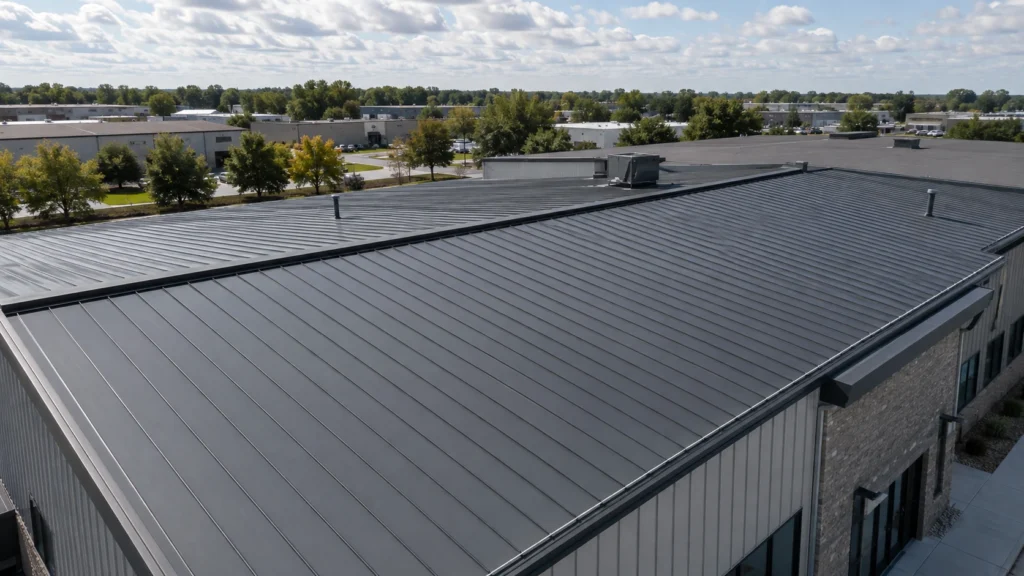
Standing seam is the commercial metal roofing system Heritage Metal Roofing installs. It uses vertical panels joined at raised seams, without exposed fasteners on the roof’s visible surface. Which standing seam configuration fits a given commercial building depends on the roof’s layout, the building’s use, and what the project needs — it isn’t a single fixed spec applied the same way everywhere. If standing seam looks like the right direction for your building, Heritage’s Commercial Metal Roofing Services page covers what that project looks like.
Other Commercial Roofing System Approaches
Standing seam isn’t the only commercial metal roofing approach used across the industry. Exposed-fastener, also called through-fastened, panel systems are a common alternative — panels are fastened directly through their face into the roof structure, with the fasteners visible on the finished roof. This is general industry information, included here to help you understand the broader landscape of commercial roofing system options as you research what might fit your building.
Building and Roof Characteristics That Influence System Choice
A few characteristics of the building and the roof itself typically shape which system direction is worth evaluating:
- Roof slope. Some system types suit certain slope ranges better than others, including lower-slope commercial roof sections that aren’t common on houses.
- Expected roof lifespan. How long the building owner wants the roof to last without a full replacement affects which systems are worth evaluating.
- Maintenance tolerance. Some systems are associated with less frequent fastener-related maintenance than others, which can matter for buildings where roof access is difficult or costly.
- Operational needs. A warehouse, an office, a retail space, and an industrial building don’t put the same demands on a roof — rooftop equipment, foot traffic, and access requirements vary by building type.
None of these factors point to a single universal answer. They’re the starting questions a commercial roofing conversation should actually be based on.
Why Roof Configuration and Project Requirements Matter
Two commercial buildings can have the same square footage and still need a different system recommendation, because the roof’s actual configuration — its slope, its penetrations, its access, and the project’s own requirements — matters more than a general rule of thumb. That’s part of why a comparison like this one is a starting point for research, not a substitute for looking at the actual roof.
When Professional Evaluation Becomes Necessary
Once you have a general sense of what distinguishes commercial roofing systems and what tends to influence the choice, the next useful step is usually a conversation grounded in your specific building, not a decision made from general information alone. That’s especially true for anything involving roof slope, structural considerations, or long-term maintenance planning, where a roof’s actual condition and configuration matter more than general guidance.
If standing seam looks like the direction that fits your building, Heritage Metal Roofing’s Commercial Metal Roofing Services page covers what a commercial project — installation, replacement, repair, and maintenance — looks like with Heritage, including commercial standing seam roofing in Sterling Heights and Metro Detroit.
FAQ
What commercial roofing system does Heritage Metal Roofing install?
Heritage Metal Roofing installs standing seam commercial roofing. The other systems described on this page are included as general industry information to help you understand the broader market as you evaluate your building’s project.
Is one commercial metal roofing system always better than another?
Not universally. Which system fits best depends on the building’s roof configuration, slope, expected lifespan, and maintenance approach — there isn’t one system that’s the right answer for every commercial building.