A properly selected and installed metal roof can perform well during Michigan summer storms, but no roofing system is immune to hail, wind, water intrusion, installation defects, or storm damage. That is the honest starting point for understanding metal roof storm damage. Metal is one of the more storm-resistant residential roofing options, and that is a real advantage during a Metro Detroit summer of severe thunderstorms, straight-line winds, and hail. It is not a force field, and understanding the difference will help you protect your home and know what to look for after a rough night of weather.
This guide walks through how metal roofing actually behaves in heavy rain, hail, wind, and heat, where damage tends to show up, how to tell cosmetic issues from functional ones, and exactly what to check after a storm. The goal is practical knowledge for a southeast Michigan homeowner, not a generic weather explainer.
How metal roofing handles heavy rain
Heavy summer downpours are where metal roofing tends to shine. The panels are smooth and shed water quickly, and there is no granular surface to wash away the way there is with asphalt shingles. Water moves off the field of the roof fast, which is exactly what you want during a Michigan cloudburst.
Rain rarely gets in through the middle of a solid panel. When a metal roof leaks, the trouble almost always starts at the transitions and connections: the seams between panels, the flashing around chimneys and sidewalls, the fasteners, and the penetrations for vents, pipes, and skylights. These are the details that separate a roof that stays dry from one that does not. Heavy, wind-driven rain can find a marginal seam or a tired flashing joint that a light rain never would.
This is why installation quality matters as much as the material. A quality panel installed with sloppy flashing will still let water in at the weak points. If you want a broader look at how these issues develop over a roof’s life, our overview of common metal roof problems covers the non-storm side of the same story.
How hail affects metal panels
Hail is the summer threat that generates the most worry and the most confusion. Here is the balanced version.
Metal roofing is impact resistant, and it does not crack or lose granules the way asphalt shingles can. But no metal roof is hail-proof, and you should be skeptical of anyone who uses that word. Depending on the size and density of the hail, the angle it strikes, the metal thickness, and the panel profile, hail can leave dents in metal panels.
Cosmetic denting versus functional damage
The key distinction is between cosmetic and functional damage.
Cosmetic denting affects appearance. The panel is dimpled or dinged, but the roof still keeps water out and performs its job. Many metal roofs that take a hail hit end up with cosmetic marks and nothing more.
Functional damage affects performance. This is when hail cracks a coating enough to expose the metal, punctures a panel, loosens a seam, or damages flashing so that water can get in or corrosion can start. Functional damage is what actually threatens the roof.
Two things follow from this. First, not all dents mean a metal roof needs replacement. Plenty of cosmetically dented roofs continue to perform for years. Second, cosmetic and functional damage are not always obvious from the ground or to an untrained eye, which is why a professional assessment matters after a significant hailstorm. Impact-resistance test standards exist for roofing products, but a laboratory impact rating describes a tested product under controlled conditions, not a guarantee for your specific roof in a specific storm. More on ratings below.
How wind affects metal roofing
Michigan summers bring strong straight-line winds and the occasional severe storm. Wind does not usually attack the middle of a well-fastened panel. It works on the edges and the details: the eaves, rakes, ridge, trim, flashing, and the fastening points. Wind uplift tries to peel a roof from its perimeter inward, so edge and flashing details are where wind resistance is won or lost.
A metal roof is not wind-proof, but a well-designed and correctly installed system resists wind well because the panels are interlocked and mechanically secured. The weak points in a storm are loose or under-driven fasteners, poorly secured trim, and flashing that was not detailed for uplift. After a high-wind event, those are the areas to look at first.
Why product ratings and installation quality both matter
You will see manufacturers reference impact and wind test ratings, and those tests are meaningful. It helps to understand what they do and do not tell you.
- A tested product rating reflects how a specific panel performed in a controlled laboratory test.
- A complete roof assembly is what actually sits on your house, including the deck, underlayment, fasteners, and flashing, and the assembly can perform differently than a single panel tested in isolation.
- Field performance is what happens in a real storm, which depends on storm intensity, the age and condition of the roof, and how well everything was installed.
So a rating is useful context, not a promise. We are not going to tell you a specific rating applies to your roof unless the exact tested product and the full assembly have been verified. In practice, real-world storm performance depends on the panel system, the metal thickness, the panel profile, the coating, the deck condition, the fastening method, the edge and flashing details, the installation quality, the storm intensity, and how exposed your building is. That is a long list on purpose, because storm resistance is a system property, not a single number.
Standing seam versus exposed-fastener systems in a storm
The type of metal roof matters during severe weather.
A standing seam metal roof hides its fasteners under raised, interlocking seams. Because the fasteners do not penetrate the face of the panel, there are fewer exposed points for wind and water to work on, and no rubber washers sitting in the sun waiting to age. This concealed-fastener design is a big reason standing seam is favored for long-term weather resistance.
An exposed-fastener system screws through the face of the panel into the deck, with a gasket or washer at each screw to seal it. It is a proven, more budget-friendly approach, but those gaskets are exposed to sun and weather and can degrade over time, and fasteners can loosen with repeated thermal movement. In storm terms, an exposed-fastener roof simply has more small details to maintain and inspect. Neither system is immune to storm damage, but they fail in different ways and age differently.
How summer heat affects a metal roof
Metal expands when it heats up and contracts when it cools, and a summer day in Metro Detroit puts a roof through that cycle daily. This is normal and expected. Quality metal roofing systems are designed to accommodate that movement. Standing seam systems, in particular, are built so the panels can move slightly without stressing the fasteners, which is one more reason concealed-fastener systems tend to hold up over the long haul.
The heat point matters for storms because a roof that cannot move freely can put stress on fasteners and seams over time, and stressed details are the same details that a storm tests. Heat management in this article is about roof durability and thermal movement rather than household energy use.
What to check after a summer storm
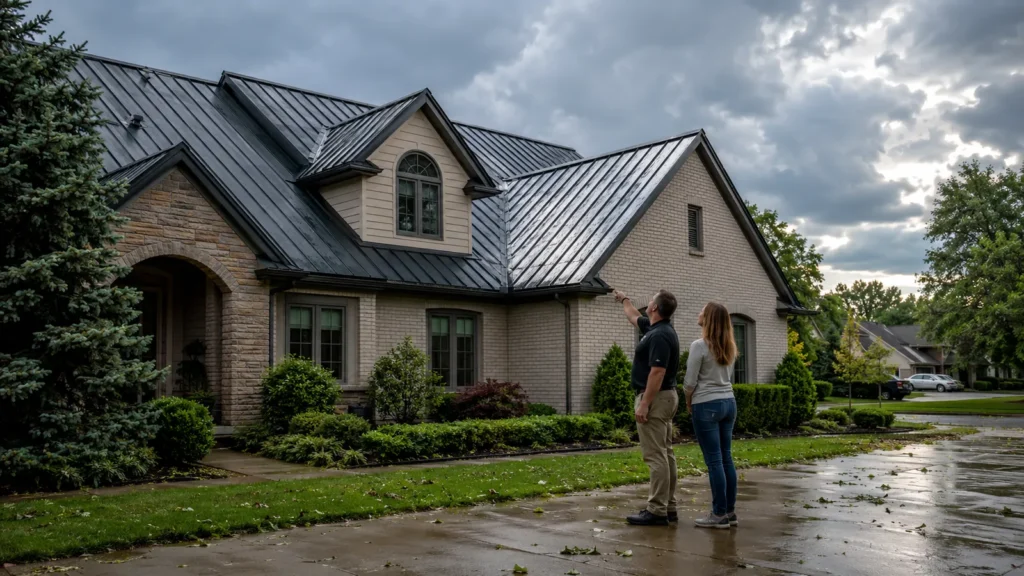
After a strong storm, a careful look can catch small problems before they become leaks. Do this from the ground and from inside the house. It is safer, and you can spot most warning signs without ever setting foot on the roof.
From the ground, look for:
- Dented, dinged, or dimpled panels, noting that dents may be cosmetic.
- Loose, lifted, or missing trim, ridge caps, or flashing.
- Fasteners that appear backed out or trim that has pulled away at the edges.
- Bent or detached gutters and downspouts.
- Debris, branches, or impact marks on the roof surface.
- Loose fasteners, sealant fragments, coating flakes, or pieces of flashing found near gutters or around the property.
From inside, look for:
- New water stains on ceilings or upper walls.
- Damp spots or drips in the attic, especially near penetrations and the roof deck.
- Daylight visible through the roof structure in the attic.
If you see any of these, it is worth having the roof looked at professionally rather than waiting for the next rain to reveal a leak. Our metal roof repair page covers the kinds of storm-related issues that a repair can address.
Warning signs that call for a professional review
Some findings deserve a professional roofer’s eyes sooner rather than later:
- Any active leak or fresh interior water stain.
- Punctures, cracked coating with exposed bare metal, or split seams.
- Displaced or missing flashing, ridge, or edge trim.
- Widespread denting after large hail, even if the roof is not leaking yet.
- Loose fasteners across a section of roof.
These are the situations where a functional problem may be hiding behind what looks minor from the driveway.
When repair may be appropriate, and when to consider replacement
Many storm issues are localized and can be addressed with a targeted repair: resealing or replacing flashing, securing trim, replacing a damaged panel or section, and correcting fasteners. If the roof is fundamentally sound and the damage is limited, repair is often the sensible path.
Replacement enters the conversation when damage is widespread, when an older roof has taken significant hail or wind damage across large areas, or when repeated problems suggest the system is near the end of its service life. Age is part of the picture too, which is why the roof’s remaining lifespan matters in the decision. If your roof is aging, our guide on how long a metal roof lasts can help frame that conversation, and our roof replacement page explains what a full replacement involves.
There is no single rule here. The right call depends on the extent of the damage, the age and condition of the roof, and a proper assessment.
Documenting storm damage and talking to your insurer
If you think a storm damaged your roof, good documentation helps, whether the records are just for your own files or for a conversation with your insurance company.
- Note the date and time of the storm.
- Take clear, dated photos from the ground of anything that looks off.
- Keep any debris or fallen material that came off the roof.
- Save records of any professional inspection or repair.
Be realistic about insurance. Whether storm damage is covered depends on your policy, the cause of loss, your documentation, any exclusions, and the insurer’s own determination. No roofer can promise that a claim will be approved, and you should be cautious of anyone who does. What a professional inspection can do is help you understand the condition of your roof and document what is there. The decision on coverage rests with your insurer.
The bottom line for Metro Detroit homeowners
Metal is one of the stronger choices for standing up to a Michigan summer of hail, wind, and heavy rain, and a well-installed standing seam system in particular is built for the long haul. It is still a roof, not a shield, and storms can find weak seams, tired flashing, loose fasteners, and the effects of large hail. The smart move after a significant storm is a careful ground-level look for signs of metal roof storm damage, followed by a professional assessment if anything seems off, so a small issue gets handled before it becomes an interior leak.
Frequently Asked Questions
Can hail damage a metal roof?
Yes. Metal is impact resistant and will not crack or shed granules like asphalt, but no metal roof is hail-proof. Depending on hail size, metal thickness, and panel profile, hail can leave dents. Some denting is cosmetic and the roof keeps performing, while larger hail can cause functional damage such as cracked coating, punctures, or loosened seams. A professional assessment after significant hail is the way to tell the difference.
Are metal roofs good in high winds?
Generally yes, because interlocked, mechanically fastened panels resist uplift well, but no roof is wind-proof. Wind works on the edges, trim, flashing, and fasteners rather than the middle of a panel, so those details and the installation quality determine how a roof holds up. After a high-wind storm, check the perimeter, ridge, and flashing first.
Can heavy rain cause a metal roof to leak?
It can, though rarely through a solid panel. Leaks almost always start at seams, flashing, fasteners, and penetrations such as vents and skylights. Wind-driven rain can expose a marginal seam or worn flashing that a light rain would not. Good flashing and installation detail are what keep a metal roof dry in a downpour.
What should I check after a summer storm?
From the ground, look for dented or loose panels, displaced trim, ridge, or flashing, backed-out fasteners, and damaged gutters. From inside, look for new ceiling or attic water stains and any daylight through the roof structure. Do this without climbing onto the roof, and call a professional if anything looks off.
Does insurance cover metal-roof storm damage?
It depends. Coverage varies with your policy, the cause of loss, your documentation, any exclusions, and the insurer’s determination. No roofer can guarantee that a claim will be approved. Documenting the storm and getting a professional inspection helps you understand and record the roof’s condition, but the coverage decision is your insurer’s.
Concerned about possible storm damage? Contact Heritage Metal Roofing to discuss a professional roof inspection and appropriate next steps.