The short answer: Stone-coated steel is a metal roof made from formed steel panels covered with a layer of natural stone granules. The panels are shaped to look like asphalt shingles, wood shake or clay tile, so from the street the roof reads as a traditional roof while the material underneath is steel. It is a different system from standing seam, which uses long vertical panels and looks openly metal. If you like the look of shingles but want a metal roof, stone-coated steel is the category to ask about.
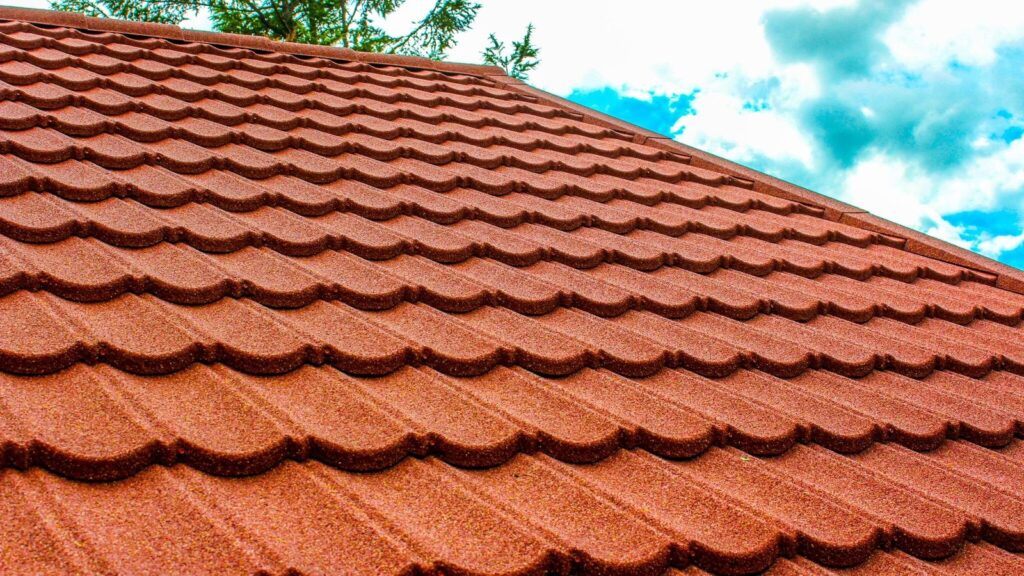
About the photo used with this guide: the image shown on our blog page and in link previews is a tile-style stone-coated steel roof made by another manufacturer and photographed in Finland. It is not a Tilcor product or a Heritage installation. The photo credit and license are at the end of this article.
What stone-coated steel roofing is
A stone-coated steel roof is built from steel panels rather than individual shingles. Each panel is pressed into a profile, such as a shingle, shake or tile shape, and then coated. Tilcor, the manufacturer whose systems Heritage Metal Roofing installs, describes its textured finish this way: natural stone granules are embedded in an acrylic base coat, a clear acrylic over-glaze goes on top, and the panel is oven cured.
You will also hear this product called stone-coated metal roofing, metal shingles or metal roofing shingles. On our metal shingle roofing page we use “metal shingles” and “stone-coated steel” for the same general category.
How a steel roof can look like shingles
Two things create the traditional look.
The shape. The steel is formed into a profile that copies the outline of a familiar roof. Heritage installs three Tilcor profiles:
- CF Shingle, styled after an architectural asphalt shingle.
- CF Shake, styled after wood shake, with a deeper and more textured profile.
- Antica, a Spanish or Mediterranean tile style.
The surface. Bare or painted steel looks smooth and reflective. The stone granules give the panel a textured, matte surface that is closer to what people expect from a shingle roof.
One practical detail you will not see from the street is panel size. Tilcor’s US installation guide lists each CF Shingle or CF Shake panel at about 49 5/8 by 14 1/2 inches of coverage, with 20 panels per roofing square (100 square feet). The panels interlock with one another, and Tilcor describes its CF systems as concealed fastening, meaning the fasteners are hidden within the panel system rather than left exposed on the surface.
How it differs from asphalt shingles
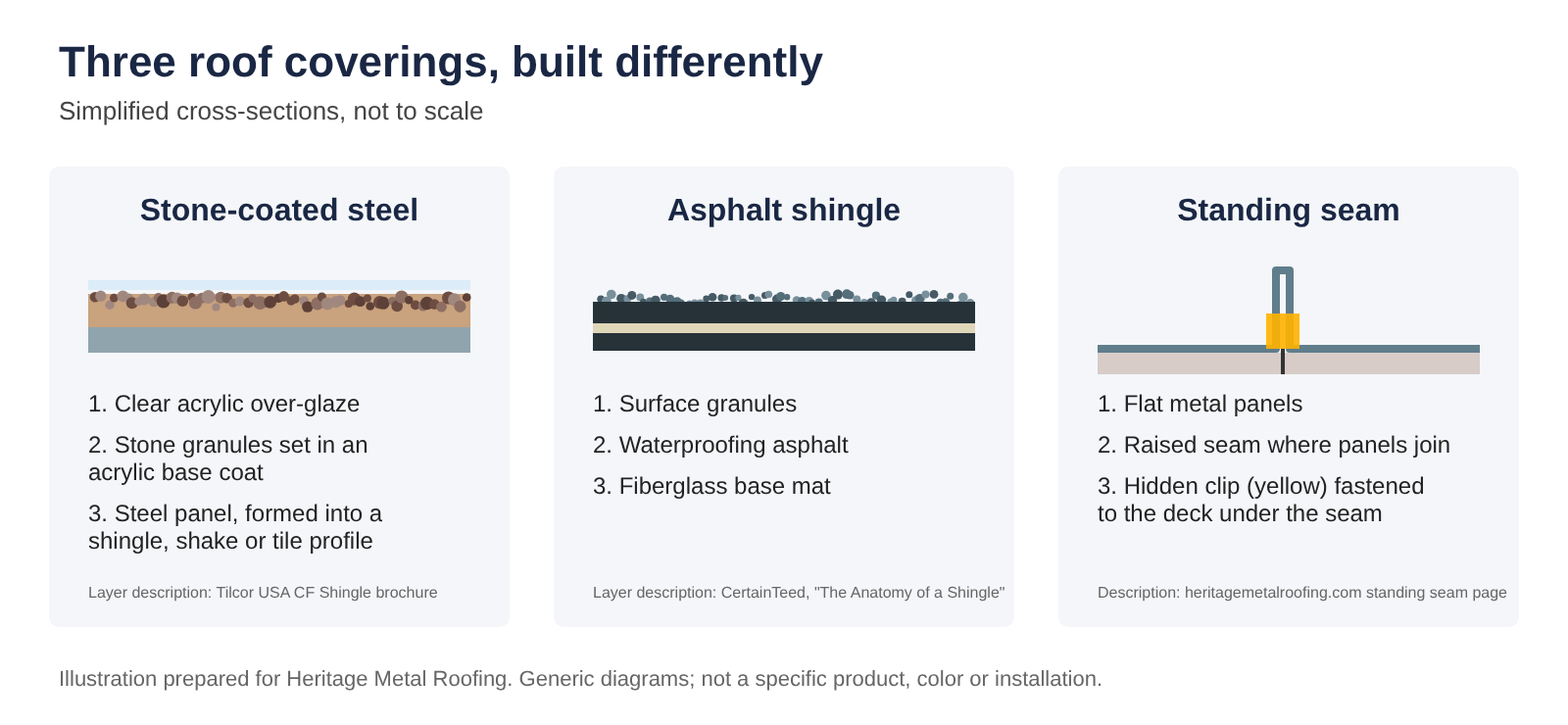
At first glance a stone-coated steel roof and an asphalt shingle roof can look alike, because both have a granular surface. The difference is what sits underneath.
- What it is made of. An asphalt shingle is built from a fiberglass base mat, waterproofing asphalt and surface granules. A stone-coated steel panel has a steel core, with the granules held in an acrylic coating.
- How it goes on. Asphalt shingles are laid one by one in overlapping courses. Stone-coated steel goes on as interlocking panels, and Tilcor’s installation guide includes its own trim and flashing components for hips, side walls and edges.
- What it costs. Metal shingle roofing costs more upfront than asphalt shingles. The exact price depends on the size and complexity of the roof, the style and color, and whether the old roof is torn off.
- What decides it. Budget, how long you expect to own the home, and the look you want usually matter most. Our metal roof vs. asphalt shingles comparison walks through that decision in more detail.
How it differs from standing seam
Heritage installs both stone-coated steel and standing seam metal roofing. They are two styles within metal roofing, not a better and a worse option.
- Appearance. Stone-coated steel imitates shingles, shake or tile. Standing seam has long, flat panels joined by raised vertical seams, which gives a clean, architectural look that is clearly metal.
- Surface. Stone-coated panels carry a granular stone finish. Standing seam panels have a smooth metal surface.
- Fasteners. Both of the systems Heritage installs use a concealed design. On standing seam, the panels attach through hidden clips or fasteners under the seam.
- Roof pitch. Pitch can decide between the two. Tilcor’s US installation guide for its CF Shingle and CF Shake systems calls for roof decks of 3:12 or steeper, while Michigan’s residential code sets a lower floor for standing seam systems and leaves the rest to the manufacturer of the specific panel. Ask which exact product and minimum pitch apply to each section of your roof.
Choices to settle with your installer
A stone-coated steel roof involves several decisions that change the look, the scope and the price. These are worth raising at your estimate.
- Profile. CF Shingle, CF Shake or Antica. Look at samples or photos of each profile before you decide, because the shadow lines look different on a real roof than on a small swatch.
- Color. Confirm the specific colors and their availability as part of your estimate.
- Tear-off or overlay. Heritage’s typical process for a metal shingle roof is a full tear-off: removing the existing roofing down to the decking, inspecting the decking and installing the new system from there. Installing over existing asphalt shingles can be appropriate in some cases, but it is the exception and is assessed roof by roof. Our guide to metal roof over shingles vs. a full tear-off covers the tradeoffs.
- Roof pitch. Ask the installer to confirm every roof section, including porches, additions and dormers, meets the manufacturer’s minimum pitch.
- Underlayment and edge details. Ask which underlayment will go under the panels and how the eaves, valleys, walls and chimneys will be flashed. Tilcor’s US guide sets a minimum underlayment standard and notes that eave-line protection may be required by local building codes.
- Warranties. Heritage provides its own workmanship warranty, and Tilcor’s manufacturer warranty applies separately to the product. Ask for the written terms of both during your estimate rather than relying on a summary.
- What is in writing. A written, itemized estimate should name the product and manufacturer, the profile, the tear-off or overlay decision and what the price includes.
Questions to ask any contractor about stone-coated steel
- Which manufacturer and which profile are you quoting?
- Will the old roof come off, or are you installing over it, and why?
- Does every section of my roof meet the manufacturer’s minimum pitch?
- What underlayment and flashing details are included?
- What are the written terms of your workmanship warranty and the manufacturer’s warranty?
- Is the estimate written and itemized?
Is stone-coated steel a good fit for your home?
It tends to suit homeowners who want a metal roof but prefer the look of shingles, shake or tile, and whose roof sections meet the manufacturer’s minimum pitch. If you would rather have a cleaner, openly metal look, or part of your roof is flatter than 3:12, standing seam may be the better conversation, depending on the panel’s own minimum pitch. Neither is right for every house, and the roof itself often settles the question.
Stone-coated steel roofing in Oakland County
Heritage Metal Roofing is based in Sterling Heights and takes metal roof installation and replacement jobs throughout Oakland County, from Troy and Rochester Hills to Novi and Clarkston. If you are weighing stone-coated steel against standing seam or asphalt, we will look at your roof, talk through the profiles that suit it and give you a free written estimate. Request your estimate or call (248) 270-2784.
Common questions
Is stone-coated steel the same as a metal shingle roof?
Generally, yes. “Metal shingles” and “stone-coated steel” are often used for the same category of product: steel panels with a stone-granule finish, shaped like shingles, shake or tile. Ask which manufacturer and profile a quote includes, because products within the category differ.
Does a stone-coated steel roof look like metal?
Usually not at a glance. The formed profile and stone-granule surface are designed to resemble a traditional shingle, shake or tile roof. Standing seam is the metal roof that looks like metal.
Can stone-coated steel go on a low-slope roof?
Tilcor’s US installation guide calls for roof decks with a slope of 3:12 or more for its CF Shingle and CF Shake systems. Below that, the guide treats the panels as decorative only, over a separate permanent roofing membrane that meets local building codes, so the panels are not the weather-tight roof on those sections. Michigan’s residential code also sets 3:12 as the floor for metal roof shingles. Ask your installer how the code and product requirements apply to the particular roof section.
How much does a stone-coated steel roof cost?
It costs more upfront than asphalt shingles, and the price depends on your roof’s size and complexity, the profile and color, and whether the old roof is torn off. Heritage gives a free, written estimate specific to your home.
Featured image: photo “Decra punaruskea Tuusula” by Ilomi, via Wikimedia Commons, licensed CC BY-SA 4.0. Cropped and resized; the edited version is shared under the same license. It shows a stone-coated steel roof in a tile-style profile and is not a Heritage project.
