Short answer: a metal roof can help with energy use in Michigan, but the benefit is usually modest and it depends heavily on our climate and on the rest of your roof system. A reflective metal roof does the most work during warm, sunny stretches by pushing solar heat away before it loads up your attic. In a heating-dominant state like Michigan, where the furnace runs far more hours than the air conditioner, that summer advantage is real but limited, and a very reflective roof can even nudge winter heating demand up a little. So metal roof energy efficiency is less about the metal being some magic material and more about how the whole roof and attic assembly is built.
If you want the honest version instead of the sales version, keep reading. We will walk through how a roof actually gains and sheds heat, what turns a metal roof into a “cool roof,” and why insulation and attic ventilation matter more than the panel color alone.
How a roof gains and sheds heat
Two properties do most of the heavy lifting when we talk about roofing and heat.
The first is solar reflectance. This is how much of the sun’s energy the roof surface bounces back instead of soaking up. A surface with high solar reflectance stays cooler because it absorbs less of the sunlight hitting it. A dark, low-reflectance surface does the opposite and heats up.
The second is thermal emittance. This is how readily a surface releases the heat it has already absorbed, radiating it back out rather than holding onto it. A roof can absorb some heat and still shed it quickly if it has high emittance.
The U.S. Department of Energy and researchers at Lawrence Berkeley National Laboratory’s Heat Island Group have studied both properties for years, and LBNL developed the concept of Solar Reflectance Index, which rolls reflectance and emittance into a single number to compare how cool a surface stays in the sun. You do not need to memorize those values. The takeaway is simple: a roof that both reflects sunlight well and releases absorbed heat well will run cooler than one that does neither.
Why does a cooler roof surface matter to you? Because heat that never enters the roof is heat your attic and your air conditioner never have to deal with. That is the core idea behind a cool roof.
What makes a metal roof a “cool roof”
Here is a point that trips up a lot of homeowners: metal by itself is not automatically a cool roof. Bare, unpainted mill-finish metal is actually shiny and reflective, so you would assume it performs great. Bare metal may have relatively high solar reflectance but low thermal emittance, which can limit how efficiently it releases absorbed heat. Cool-roof performance depends on both properties, so bare mill-finish metal generally does not qualify as a cool roof.
What turns a metal roof into a genuine cool roof is the coating and the color.
Coatings
Modern metal roofing panels are finished with specialized reflective paint systems, often engineered with pigments that reflect a good share of solar energy, including in the near-infrared range you cannot see but that still carries heat. These coatings raise both reflectance and emittance, which is exactly the pairing that keeps a surface cool. Current U.S. Department of Energy cool-roof guidance explains how solar reflectance and thermal emittance affect roof temperature and building energy use. (ENERGY STAR discontinued its dedicated roof-products specification in 2022, so roofing is no longer certified under an ENERGY STAR roof program.) Just know that not every metal roof carries a reflective coating, so the specific product and finish matter.
The best metal roof color for energy
Color is the part everyone asks about, and it does move the needle. Lighter colors like white, light gray, and beige reflect more sunlight and stay cooler in summer. Darker colors like deep charcoal, black, and rich browns absorb more solar heat.
If your only goal were peak summer reflectance, the best metal roof color for energy would be a light, coated shade. But most Michigan homeowners are also choosing based on how the roof looks with their siding and their neighborhood, and there are cool-pigment coatings that let darker colors reflect more infrared heat than an ordinary paint of the same shade. So you are not stuck picking between “looks good” and “performs.” You just want to be intentional about it.
The Michigan cold-climate reality
This is where honesty separates a good roofer from a pushy one. Cool-roof benefits are largest in hot, sunny, cooling-dominant climates. Michigan is not that. We are a heating-dominant climate, which means our homes spend far more energy fighting the cold than fighting the heat.
The Department of Energy’s cool-roof guidance points out that highly reflective roofing reduces cooling energy use, which is a real plus during our humid July and August stretches. But DOE also notes the flip side for cold climates: in winter, a very reflective roof reflects away some of the sun’s warmth that a darker roof would have captured, which can slightly raise heating demand. This is sometimes called the winter heating penalty.
So what is the net effect in Michigan? It depends on your specific home, but the summer cooling savings and the small winter heating tradeoff partly offset each other. That does not mean a metal roof is a bad energy choice here. It means you should expect a modest, climate-dependent benefit rather than a dramatic cut in your bills. Anyone promising a big guaranteed percentage is guessing.
Why the whole roof-and-attic assembly matters more than the metal
If you take one thing from this article, make it this: the panel on top is only one layer of your energy story. The bigger levers are what sits underneath and around it.
Attic insulation
Insulation and air sealing are often among the most influential parts of the home’s overall energy performance, shaping how much rooftop heat, hot or cold, actually reaches your living space. A roof with excellent reflectance sitting over a poorly insulated attic will still let heat migrate down in summer and escape in winter. In many homes, adequate attic insulation does more for year-round comfort and energy use than the roof color alone.
Attic ventilation
Proper attic ventilation lets built-up heat and moisture move out instead of stagnating under the deck. Good intake and exhaust airflow keeps attic temperatures more stable, protects the insulation’s performance, and helps the whole system behave the way it was designed to. In our winters, ventilation also plays a role in keeping the roof deck cold and even, which reduces the conditions that lead to ice dams.
The system, not the panel
When reflectance, emittance, insulation, and ventilation all work together, you get real energy performance. When one is missing, the others cannot fully make up for it. This is why we describe energy efficiency as a property of the complete roof and attic assembly, not the metal alone. A quality metal roof is a strong component of that system, but it is a component, not the whole answer. If you are weighing the broader tradeoffs, our overview of metal roofing pros and cons covers more than energy.
Realistic expectations
Let us set the record straight so you can plan sensibly:
- A reflective, properly coated metal roof can lower cooling demand during Michigan summers. The effect is real but usually modest.
- In winter, a very reflective roof may slightly increase heating load, which partly cancels the summer gain in a heating-dominant climate.
- The size of any savings depends on your insulation, ventilation, roof color, coating, home design, and how you use your HVAC. There is no single percentage that fits every house.
- Metal’s biggest energy-adjacent wins in Michigan are often durability and longevity, since a roof that lasts decades avoids the material and labor cycle of frequent replacements. See how that plays out in how long a metal roof lasts.
We are deliberately not quoting you a savings number, because an honest number would have to come with so many “it depends” caveats that it would be close to meaningless. If a contractor hands you a firm percentage, ask what climate and home configuration it is based on.
Making a smart energy choice for your home
The goal is to match the roof to the home and the homeowner’s priorities, not to oversell a coating. A roofing consultation can consider panel finish, roof color, ventilation, and the condition of the existing roof assembly, and how a new standing seam system would tie into all of it.
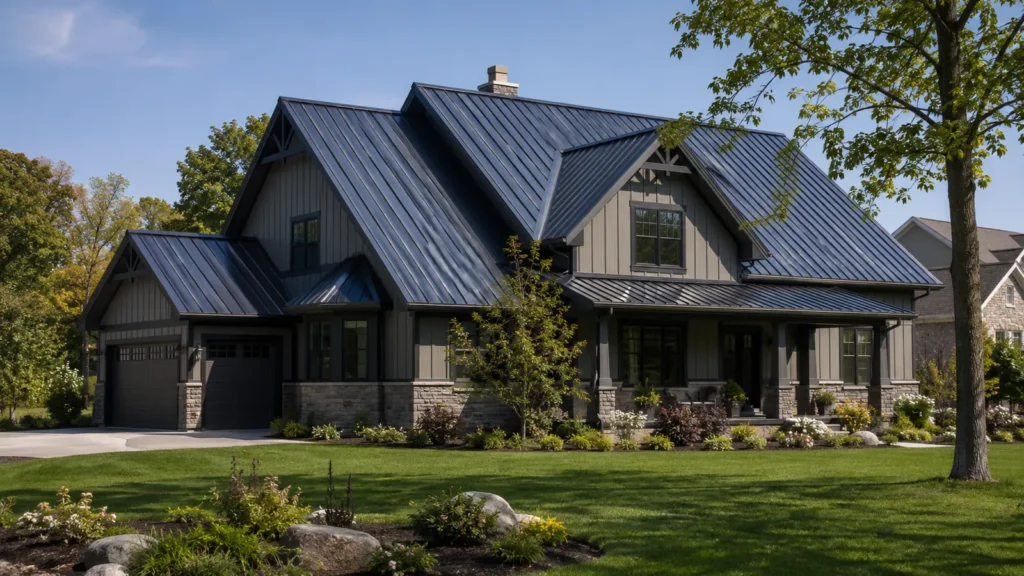
For a lot of homeowners, standing seam metal roofing is a strong fit, with clean lines, concealed fasteners, and reflective coating options that support cool-roof performance without forcing a color you dislike. A full roof replacement can also be a practical time to address insulation and ventilation, since the assembly is more accessible during that work.
Setting accurate expectations up front is more useful than promising savings that cannot be stood behind. That approach tends to make for more confident homeowners a few winters down the road.
Frequently Asked Questions
What makes a metal roof a cool roof?
A metal roof becomes a cool roof when its surface both reflects a large share of sunlight (high solar reflectance) and readily releases absorbed heat (high thermal emittance). Reflective coatings and lighter or cool-pigment colors provide that pairing. Bare, unpainted mill-finish metal does not qualify because it has low thermal emittance, so it holds heat rather than shedding it.
Do metal roofs lower energy bills in Michigan?
They can help, mainly by trimming summer cooling demand, but the effect is typically modest here. Michigan is a heating-dominant climate, so the summer savings can be partly offset by a small winter heating tradeoff on very reflective roofs. Your insulation and ventilation influence the outcome far more than the panel alone.
What is the best metal roof color for energy efficiency?
For peak summer reflectance, lighter colors such as white, light gray, and beige stay coolest. That said, cool-pigment coatings can help darker colors reflect more heat than standard paint of the same shade, so you can balance appearance and performance rather than choosing one over the other.
Does a metal roof help in winter or just summer?
Its clearest energy effect is in summer, when reflectance reduces heat gain. In winter, a very reflective roof reflects away some solar warmth a darker roof would have absorbed, which can slightly raise heating needs. Proper attic insulation and ventilation matter most for year-round winter comfort.
Is the metal itself what saves energy?
No. Energy performance comes from the complete roof and attic assembly. Reflectance and emittance of the coated surface matter, but attic insulation and ventilation usually have a larger impact on your comfort and energy use than the metal panel by itself.
Ready to look at real options for your home? Talk with Heritage about energy-smart standing seam options, including panel finish, roof color, and ventilation considerations. Prefer to start with a quick conversation? Reach out here.